
Email is an essential tool for your business, yet it remains subject to constant, targeted attacks. Every day, your employees open messages from vendors, clients, and partners, trusting that whatever is in their inbox is legitimate. Cybercriminals are banking on exploiting that trust. As National Email Week puts a spotlight on business communication, it’s worth asking a harder question: Is your current email security actually keeping up?
Many businesses rely on the spam filter built into their email platform and assume that’s enough. It isn’t. Today’s threats are far more sophisticated than a basic filter was designed to stop. That’s why SMB owners need to know where standard filters fall short, what stronger protection looks like, and why the upgrade matters for your business.
The gap between “filtered” and “secure”
Standard spam filters do one thing reasonably well: reduce inbox clutter. They catch spam, known malicious domains, and previously flagged senders. While this provides a baseline of protection, it often creates a false sense of security for many business owners.
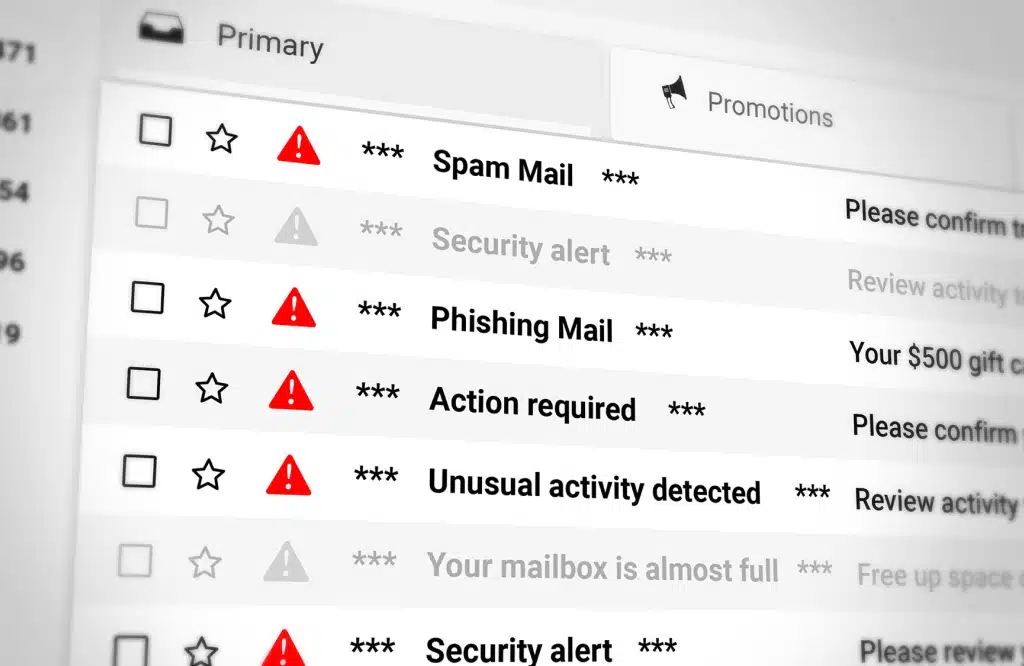
The most damaging email threats today are not obvious. Business email compromise (BEC) attacks arrive as clean, professional messages with no attachments or suspicious links. Phishing emails are increasingly personalized, mimicking the tone of trusted contacts. Some attackers even use URLs that appear safe at delivery, then redirect to malicious sites after the email clears a filter.
For businesses, a successful attack can expose client data, trigger ransomware across your network, or facilitate a fraudulent transfer that’s nearly impossible to recover.
What advanced email security actually covers
Stronger protection works in layers, each closing a gap that basic filters leave open:
- AI-powered threat detection: Machine learning tools analyze message behavior and sender anomalies to flag threats with no known malicious signature — the kind traditional filters never catch.
- Real-time link scanning: Advanced solutions scan URLs at the moment a user clicks, not just at delivery, closing the window attackers exploit by swapping safe links for malicious ones post-delivery.
- Attachment sandboxing: Suspicious files are opened in an isolated environment first. If a file behaves maliciously, it’s blocked before reaching your employee’s inbox.
- Impersonation and spoofing defense: This defense detects emails engineered to look like they came from your CEO, a vendor, or a trusted partner.
- Encryption and data loss prevention: These features protect outbound messages so sensitive business and client information doesn’t leave your organization exposed.
The business case for stronger email security
Email security is a foundational element of business continuity. Implementing effective email security strategies can impact the following elements:
- Productivity: A ransomware incident or phishing-driven breach can take your team offline for days. Stronger email security significantly reduces that risk.
- Finances: BEC scams cost businesses billions annually. Catching impersonation attempts before employees act on them can prevent substantial losses.
- Risk reduction: Fewer successful attacks mean fewer incidents to investigate and remediate, lowering both response time and cost.
- Compliance readiness: In regulated industries, email controls like encryption and audit logging are often required, not optional. The right protections keep you on the right side of your obligations.
Your email deserves more than a basic filter
Basic spam filtering was built for a different era. The threats targeting businesses today are faster, smarter, and more targeted than any standard filter is equipped to handle. Moving to a layered approach means your business is protected before, during, and after an email is delivered — not just when it arrives.
At Spectrumwise, we help SMBs evaluate their current email security and put the right protections in place. If you’re unsure whether your inbox is as secure as your business needs it to be, we’d welcome the conversation. Contact us today to schedule a no-pressure consultation.